






How Real-Time Child Welfare Updates Build Donor Trust and Sponsor Retention
Trust is the foundation of every successful orphan care program.
Sponsors commit their resources because they believe their support is improving a child’s life. They trust that the organisation is providing consistent care, monitoring well-being, and using donations responsibly. Yet trust doesn’t grow simply because care is being delivered. Trust grows when donors can see that care is happening.
This is where many orphan care organisations face a challenge.
Children may be receiving excellent support, caseworkers may be doing their jobs effectively, and welfare checks may be happening regularly. But if sponsors receive limited updates or long gaps between communications, they are left with unanswered questions.
When visibility decreases, confidence often follows.
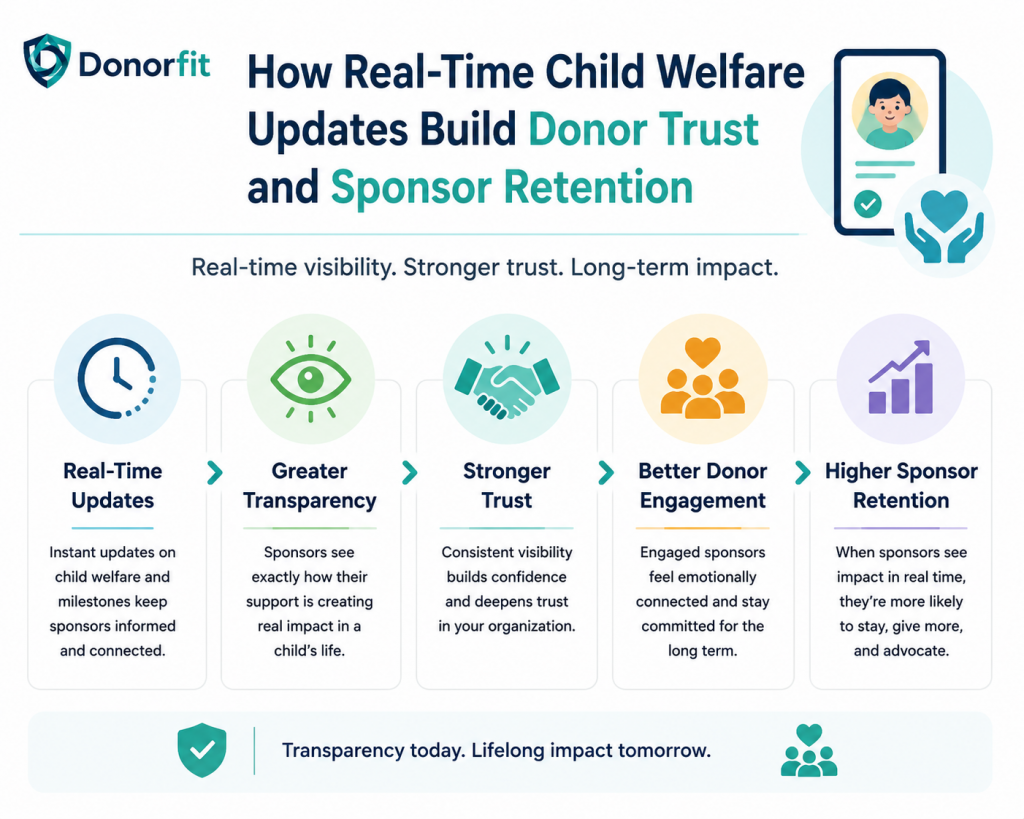
Real-time child welfare updates help bridge this gap by providing transparency, strengthening donor relationships, and improving sponsor retention over time.
Why Donor Trust Matters More in Orphan Care Programs
Unlike many fundraising campaigns, orphan care sponsorship is deeply personal.
Sponsors are not contributing to a broad cause alone. They are supporting a specific child and often develop a strong emotional connection to that child’s well-being and future.
Because of this connection, sponsors naturally expect answers to questions such as:
- Is the child attending school?
- Are healthcare needs being met?
- Have there been any important milestones?
- Is the child safe and receiving proper care?
- How is my sponsorship making a difference?
When organisations can answer these questions consistently, trust grows.
When information is delayed or unavailable, uncertainty grows instead.
The Problem with Traditional Reporting
Many orphan care organisations still rely on spreadsheets, emails, and disconnected systems to manage child records and sponsor communications.
While these tools may help teams track information internally, they often create delays in donor-facing reporting.
Common challenges include:
Delayed Child Updates
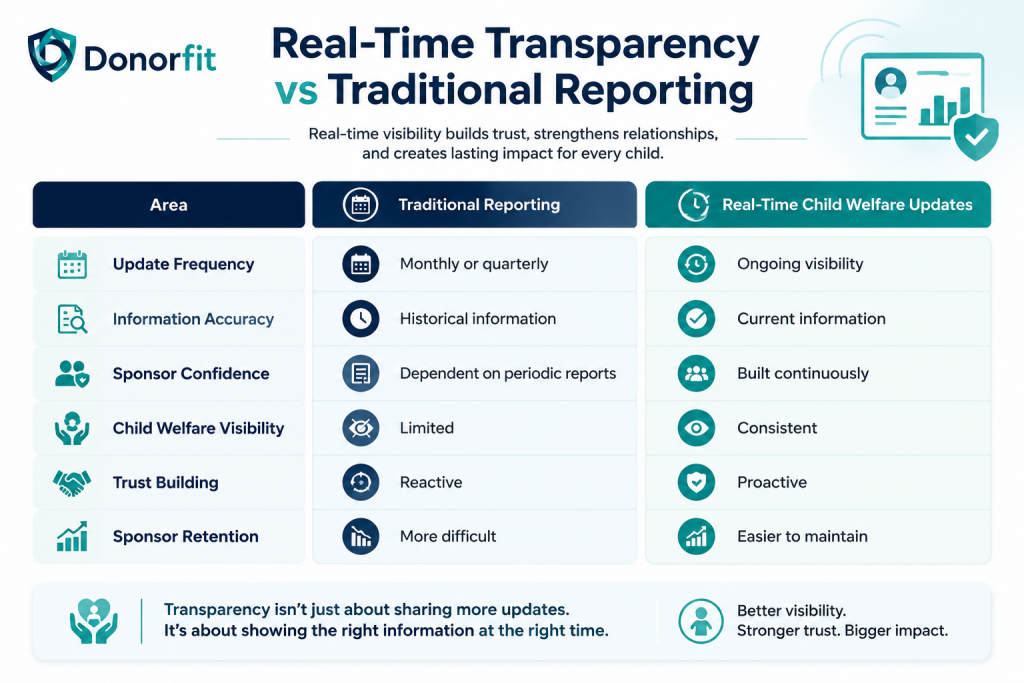
Caseworkers collect information regularly, but updates are often compiled weeks or months later before being shared with sponsors.
By the time the sponsor receives the report, the information may no longer reflect the child’s current situation.
Communication Gaps
When sponsors do not receive updates for extended periods, they cannot determine whether:
- Everything is progressing normally
- Updates are simply delayed
- Important information has been missed
This uncertainty weakens confidence.
Disconnected Information
In many organisations, child welfare records and donor communication systems operate separately.
As a result:
- Caseworkers have one set of information
- Fundraising teams have another
- Sponsors receive summarised reports instead of current information
This disconnect reduces transparency.
Why Real-Time Child Welfare Updates Matter
Real-time visibility transforms the sponsor experience.
Instead of waiting months to understand how a child is doing, sponsors receive ongoing confirmation that care is being provided and milestones are being achieved.
Benefits include:
Increased Transparency
Sponsors gain a clearer understanding of how their contributions support a child’s wellbeing.
Transparency demonstrates accountability and builds confidence.
Stronger Emotional Connection
Regular updates help sponsors feel connected to the child’s journey.
This emotional engagement strengthens long-term commitment.
Greater Confidence in the Organisation
Organisations that provide consistent visibility demonstrate professionalism, accountability, and operational excellence.
Sponsors are more likely to trust organisations that openly share information.
Improved Sponsor Retention
Retention is often driven by engagement.
Sponsors who regularly see evidence of impact are less likely to disengage or cancel support.
Real-Time Transparency vs Traditional Reporting
How Transparency Directly Impacts Sponsor Retention
Many organisations focus heavily on acquiring new sponsors.
However, retaining existing sponsors is often more cost-effective and sustainable.
Sponsors rarely leave because they suddenly stop caring about a child.
More often, they disengage gradually because:
- Communication becomes inconsistent
- Impact becomes difficult to see
- Confidence decreases over time
Real-time child welfare updates address all three issues.
When sponsors consistently see evidence of care, well-being, and progress, they remain connected to both the child and the organisation.
Trust remains active rather than relying on assumptions.
Building a Transparency-Driven Orphan Care Program
Improving transparency is not simply about sending more emails.
Organisations need systems that connect:
- Child welfare records
- Case management activities
- Sponsor communications
- Reporting workflows
When these systems work together, updates become easier to deliver, more accurate, and more meaningful for sponsors.
Transparency becomes part of the organisation’s process rather than an occasional reporting exercise.
The Future of Donor Trust in Orphan Care
Donor expectations are changing.
Modern sponsors want more than annual reports and periodic newsletters. They want visibility, accountability, and reassurance that their support is creating real impact.
Organisations that provide real-time child welfare visibility will be better positioned to:
- Build stronger donor relationships
- Increase sponsor retention
- Improve transparency
- Strengthen fundraising performance
- Deliver better supporter experiences
Trust is no longer built solely through promises.
It is built through visibility.
Conclusion
The quality of care provided to children remains the most important priority for every orphan care organization.
However, care alone is not enough to maintain donor confidence.
Sponsors need visibility into the impact of their support. Real-time child welfare updates help organizations demonstrate accountability, strengthen relationships, and build the trust required for long-term sponsor retention.
Organisations that prioritise transparency today will be the ones that build stronger donor communities tomorrow.
FAQs
Why are child welfare updates important for sponsors?
Child welfare updates help sponsors understand how a child is progressing and how their support is making a difference. Consistent updates build confidence and strengthen donor relationships.
How do real-time updates improve donor trust?
Real-time updates provide transparency and reduce uncertainty. Sponsors can see ongoing care and progress rather than relying solely on periodic reports.
What causes sponsors to stop supporting orphan care programs?
Common reasons include poor communication, limited visibility into impact, inconsistent updates, and declining engagement over time.
How does transparency improve sponsor retention?
Transparency strengthens confidence and emotional connection. Sponsors who regularly see evidence of impact are more likely to continue supporting a child long term.
What role does technology play in orphan care transparency?
Modern orphan care management platforms help organisations connect child welfare records, case management activities, and donor communications, making real-time visibility possible.